Face shape guide
Oval Face Shape: Traits, Hair, and Glasses
Learn the common signs of an oval face shape and explore balanced hairstyle and glasses directions.
Analyze my face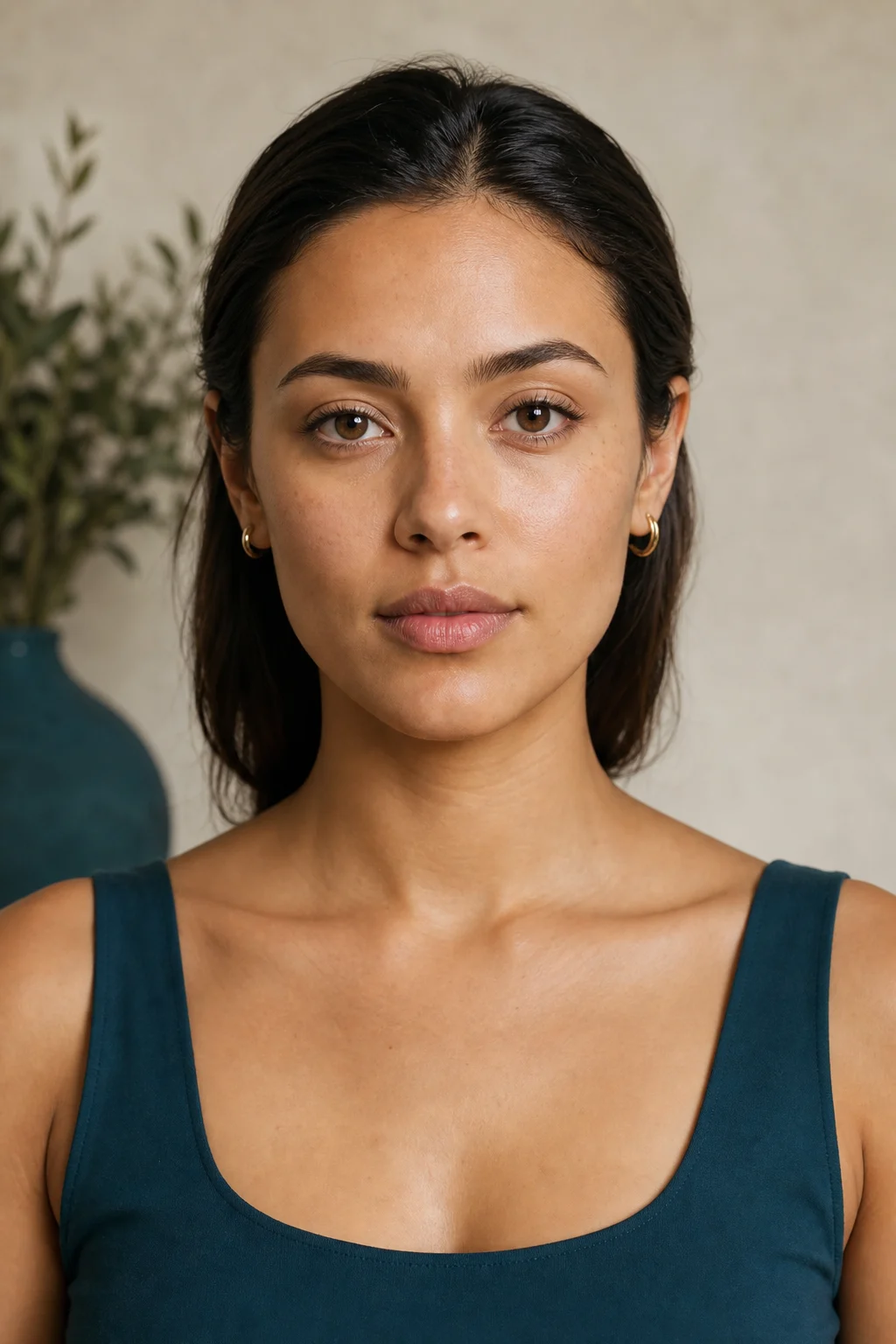
Recognizing an oval face shape
An oval face is usually longer than it is wide, with cheekbones that form the widest point and a jawline that narrows softly toward the chin. The forehead is often a little wider than the jaw, without a sharp change between the two.
The useful distinction is balance, not perfection. An oval outline can have a rounded jaw, a subtle point at the chin, or a higher hairline. Look at the overall relationship of forehead, cheeks, and jaw instead of isolating one feature.
A practical oval face check
Start with a neutral, face-forward view. First, notice whether the face reads longer than wide without looking especially long. Next, compare the forehead and jaw: an oval outline often eases from the cheekbones toward the chin instead of staying the same width through the sides. Finally, step back and ask whether any one area dominates. If the forehead, cheekbones, and jaw feel like parts of one gradual outline, oval may be the more useful label.
Do the same check in a mirror and in a photo if you can. A raised chin, a close camera, or hair covering the temples can make the face look longer or more tapered than it does at rest. The goal is to find the pattern that appears most often, not to make every view fit one category.
Measurement cues
An oval pattern is easiest to recognize by its gradual relationships. The face usually looks somewhat longer than wide, the cheekbones are often the widest point, and the forehead eases toward a softer, narrower jaw. None of those measurements has to be dramatic. The useful question is whether the outline reads as one gentle taper rather than as a strong upper, middle, or lower width.
Compare the same view with hair moved away from the temples and jaw. A close selfie, lifted chin, or dense side volume can make the face appear longer or more tapered than it does at rest. The manual face shape calculator is a private alternative when you want to compare broad proportions without a photo. If oblong is a close second, focus on how obvious the vertical line feels.
Hairstyle directions
Because an oval outline is relatively balanced, a haircut can either preserve that balance or deliberately add contrast. A textured crop, soft layers, curtain fringe, side part, bob, waves, or longer sleek lengths can all work when the scale suits your features and hair texture. Crown height creates a more vertical line; width at the temples makes the silhouette feel broader; and a fringe moves attention toward the eyes.
Make routine part of the decision. Fine hair may prefer a compact perimeter or light texture rather than too many layers. Dense, curly, or coily hair may need shape placed where it naturally expands. The oval hairstyle guide provides more specific directions, but it is still useful to try two opposite silhouettes before deciding what feels most like you.
Glasses directions
Oval faces can often carry a range of frame shapes, so fit and desired visual weight matter more than trying to find a corrective frame. Soft-square, rounded rectangle, wayfarer, light wire, and subtle cat-eye shapes each create a different eye line. A moderate-width frame keeps the proportions quiet; oversized acetate or a stronger brow line becomes a deliberate focal point.
Check bridge comfort and lens placement before judging the mirror image. A frame that sits securely and works with your prescription will be easier to wear than one that follows a shape rule. Use the oval glasses guide to compare frame scale, line, and styling direction in more detail.
Use the result as context
An oval result gives you room to compare styles that create very different effects. Keep one option that follows the gentle outline and one that adds a stronger line, volume, or color. Evaluate both in your usual routine rather than trying to preserve balance at all costs. Your preference, maintenance, and comfort are the standards that make a style worth keeping. Take the same view in ordinary daylight and in the settings where you spend time. A frame or haircut can feel different while moving, using a screen, or wearing your usual clothing, and those practical observations should guide you.
Style principles
Because the outline is already fairly balanced, most styles work when their scale matches your features. Keep a hairstyle's volume intentional rather than adding width everywhere. Frames with a little structure can create contrast, while softer shapes keep the outline relaxed.
Try soft layers, a curtain fringe, or a textured crop. Soft-square, wayfarer, and subtle cat-eye frames are useful starting points. The goal is not to correct the face, but to choose a line you enjoy wearing.
Common confusions
Oval and oblong shapes can look alike. Oblong faces read noticeably longer, often with a more even width from temple to jaw. Oval and heart shapes can also overlap when the forehead is broad, but a heart shape usually narrows more clearly at the chin.
When length is the only uncertainty, compare oval and oblong face shapes. If prominent cheekbones are the question, the diamond and oval comparison gives a more direct check. For a second opinion, find your face shape manually or analyze a photo privately.