Face shape guide
Diamond Face Shape: Traits, Hair, and Glasses
Learn the cheekbone-led proportions of a diamond face shape and style ideas that work with its contours.
Analyze my face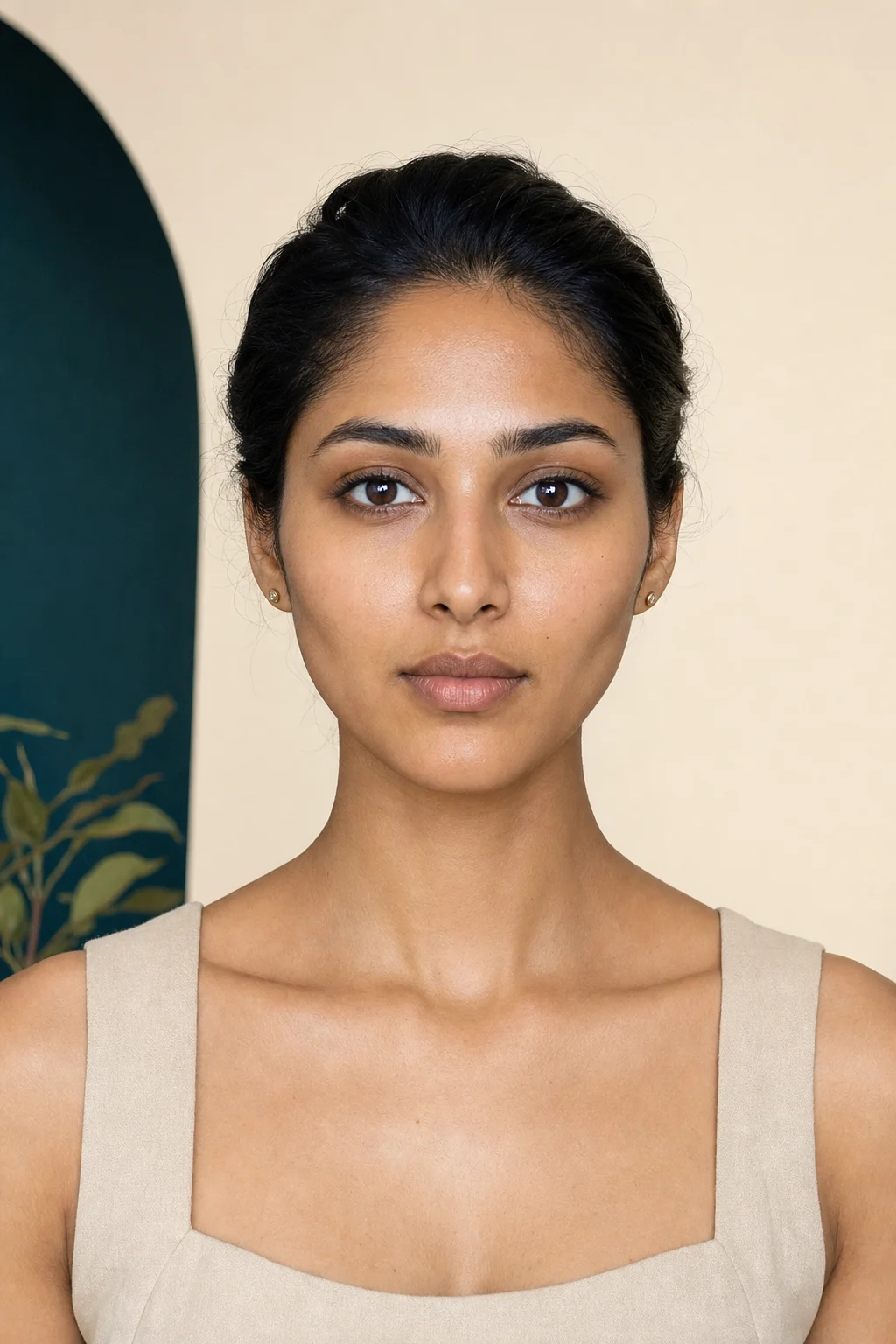
Recognizing a diamond face shape
A diamond face shape is usually widest at the cheekbones, with a forehead that narrows above them and a jaw that narrows below them. The chin may look gently pointed, while the cheekbone area provides the strongest horizontal line.
It helps to separate cheekbone width from hair volume. Look at a front-facing photo with the face level; a side angle can make the cheekbone line look wider or narrower than it is.
A practical diamond face check
Check the horizontal lines one at a time. First, compare the width across the cheekbones with the width at the temples. Next, compare the cheekbones with the jaw. A diamond outline usually has its clearest width through the centre, while both the forehead and lower face step in from that point. The chin can be softly rounded or a little pointed, so it is less useful than the relationship between the three widths.
Use a photo with hair off the temples where possible. Volume around the sides can make the face appear wider at the forehead, and a turned head can push one cheekbone forward. If the upper face keeps more width than the cheekbones, heart may be a more useful label. If the three widths feel close, compare with oval instead of deciding from the chin alone.
Measurement cues
Treat the cheekbones as a relationship, not a single measurement to hunt for. In a level, face-forward view, compare the visible width across the temples, the fullest part of the cheeks, and the outer corners of the jaw. A diamond pattern usually has the clearest width through the cheeks, while the forehead and jaw sit noticeably inside that line. The face may still be long, short, soft, or angular; the location of the widest point is the useful clue.
Take the comparison in more than one view. Hair covering the temples can make the cheekbones look disproportionately broad, and a turned head can move the widest point toward one side. The manual face shape calculator offers a private way to record the four broad measurements and compare the result with what you see. Use it to narrow the options, not to force a perfect match.
Hairstyle directions
Movement around the temples or upper sides can change where the eye first lands. A soft side part, curtain fringe, layered bob, textured crop, or modest crown lift can place visual interest above the cheekbones when that is the effect you want. Longer face-framing pieces can keep the outline relaxed, while a close, clean cut can make the cheekbone structure more visible.
Hair texture changes the choice. Coils and curls may naturally build width at the sides, so the cut can focus on a clear shape rather than adding volume by default. Fine hair may prefer a shorter perimeter or a slightly off-center part that holds its form. Explore the diamond hairstyle guide for directions by silhouette, then choose the one that suits your routine.
Glasses directions
Oval, softly curved, rimless, and upswept frames can bring attention toward the eyes and brow area. A frame with a clear top line may create lift; a lighter wire frame can make the glasses feel less dominant. Wider frames can be a deliberate statement, but the temples and bridge still need to fit your actual head rather than an abstract face-shape rule.
Try one understated frame and one with more visible structure in ordinary light. Notice whether you want the glasses to soften, echo, or contrast with the cheekbone line. The diamond glasses guide adds practical frame directions, including how scale and prescription needs can affect the final choice.
Use the result as context
A diamond label is most useful when it helps you compare choices, not when it limits them. Keep one style that echoes the cheekbone structure and one that creates contrast in your try-on set. A photo in familiar lighting can show the difference more honestly than a single mirror angle. Return to the measurements when a new haircut, glasses pair, or expression changes what you notice. When possible, compare two options at the same time of day and at the same distance from the camera. Consistent conditions make a styling preference much easier to separate from a temporary lighting or angle effect.
Style principles
Adding softness near the forehead and jaw can make the cheekbone line feel more integrated. Side-swept fringe, chin-length texture, and tucked-behind-ear styles are useful directions. Cat-eye, oval, and browline frames can work with the eye line and cheekbone width in different ways.
The cheekbones are a distinctive feature, so you can either echo them with a lifted frame or soften the transition with a rounded style.
Common confusions
Diamond and heart shapes both may taper to the chin. A diamond shape is more cheekbone-led, while a heart shape keeps more width through the forehead. Diamond and oval shapes differ most in how much the forehead and jaw narrow from the cheeks.
Use the heart and diamond comparison to check the upper face, or compare diamond and oval face shapes when the outline feels evenly balanced. Compare the heart face shape guide, use the manual method, or analyze a photo privately.