01
Overall length
Notice whether the whole outline feels close to as long as it is wide, gently longer, or clearly vertical.
Face shape library
Compare seven familiar outlines, then use the style ideas as a starting point rather than a rule.
Analyze my face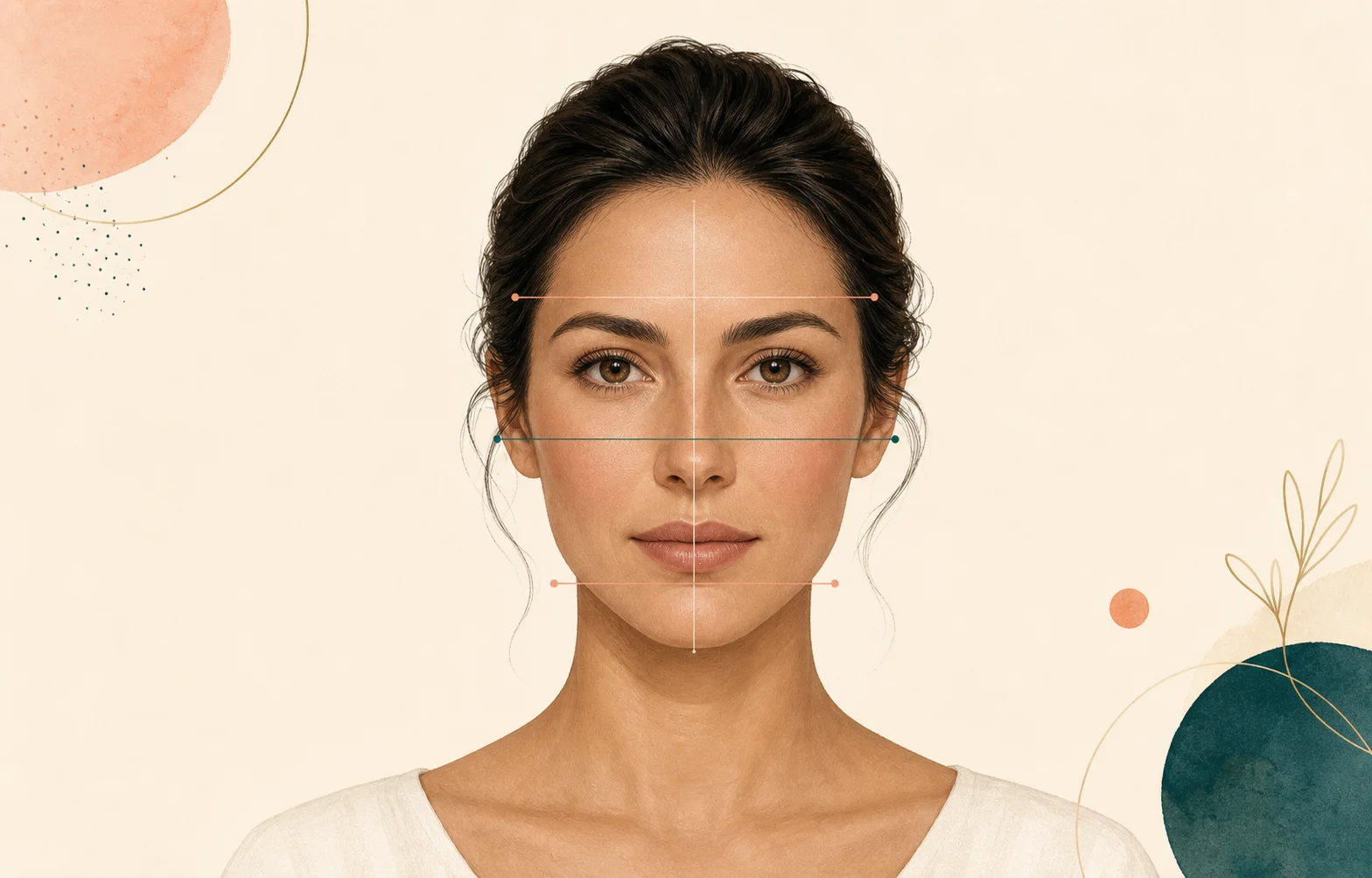
Face shapes are a simple way to describe the front-facing relationship between face length, forehead, cheekbones, jaw, and jawline. They are not a beauty score, diagnosis, or fixed identity. Most people share features with more than one familiar pattern, so the useful question is which overall outline feels most consistent across neutral views.
Start with the whole outline, then compare these four relationships in the same level, face-forward view.
01
Notice whether the whole outline feels close to as long as it is wide, gently longer, or clearly vertical.
02
Compare the forehead, cheekbones, and jaw in one level view to see where the outline opens most.
03
Trace the sides from temple to chin: they can taper, remain fairly even, or open toward the jaw.
04
Look at the path from cheek to chin. It may read as curved, softly tapered, or more angular.
Use these as starting descriptions, then open the guide that best matches your overall outline.
Longer than wide, with a gentle taper from cheekbones to jaw.
Similar visible length and width, with curved cheek and jaw transitions.
Similar visible widths through forehead, cheeks, and jaw, with a more defined lower contour.
More width through the upper face, narrowing toward the chin.
Cheekbones create the widest point while forehead and jaw read narrower.
Noticeably longer than wide, often with relatively even side lines.
A narrower upper face that becomes broader through the jaw.
A close match is common. Compare the one relationship creating the uncertainty instead of trying to force every feature into one label.
Check whether length stays balanced or creates a stronger vertical impression.
Look beyond similar length and width to compare the transition through the jaw.
Find the widest horizontal line before deciding which tapered outline fits best.
Compare whether a strong jaw is part of an even outline or wider than the upper face.
Read the manual method when you want to compare your own observations, or use a clear photo for a private browser-only estimate. A nearby second shape is useful context, not a failed result.
Open a guide for the visual signs, common confusions, and practical directions associated with each pattern.

Learn the cheekbone-led proportions of a diamond face shape and style ideas that work with its contours.

See how a wider upper face and narrower lower face can form a heart face shape, with practical style ideas.

Recognize an oblong face shape from its longer vertical line and explore ways to add visual width.

Learn the common signs of an oval face shape and explore balanced hairstyle and glasses directions.

Identify a round face shape from its softer, similar length and width proportions, then explore style directions.
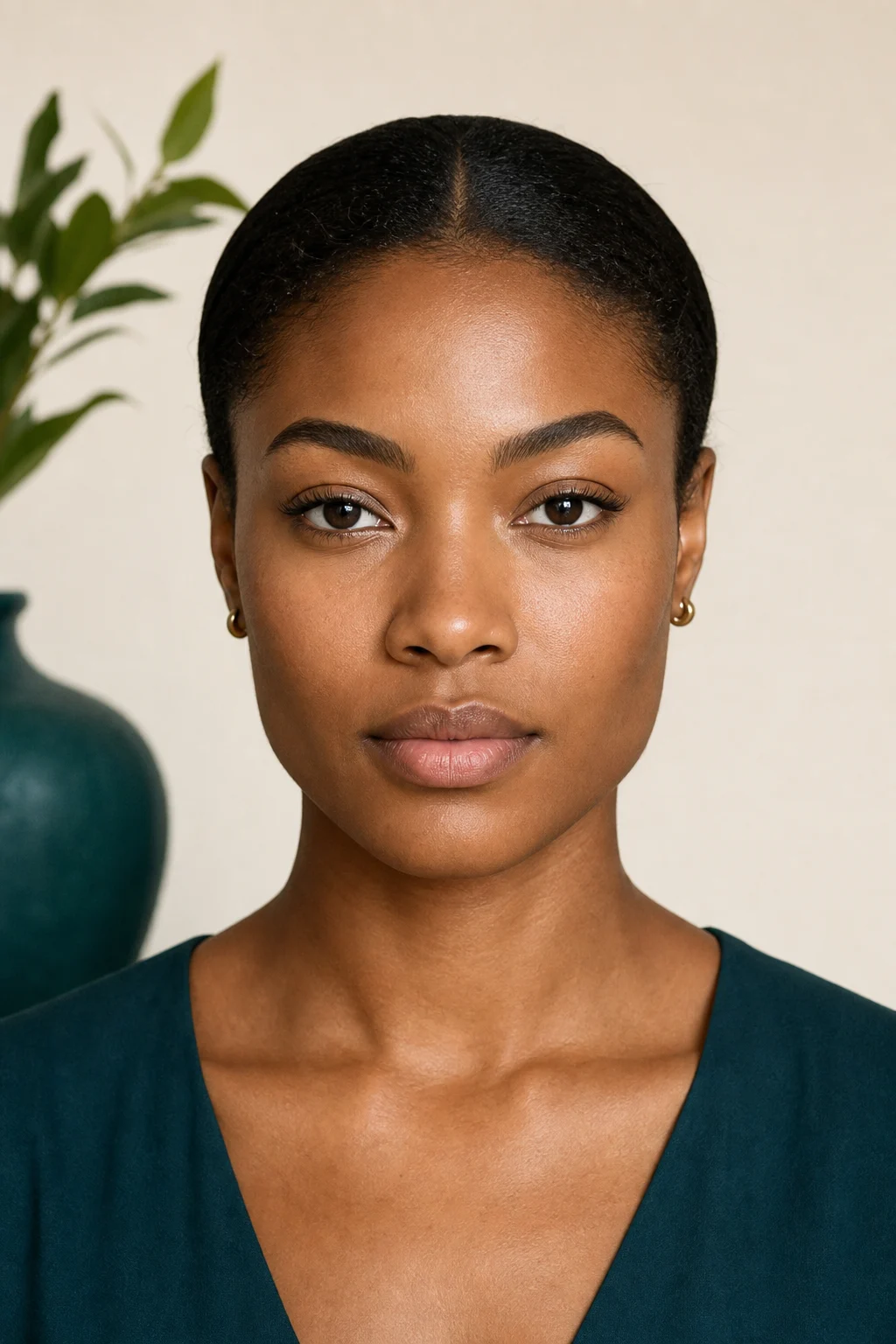
Understand the equal-width, defined-jaw proportions commonly associated with a square face shape.

Identify a triangle face shape from a wider jawline and narrower upper face, with styling directions to explore.