Face shape guide
Square Face Shape: Traits, Hair, and Glasses
Understand the equal-width, defined-jaw proportions commonly associated with a square face shape.
Analyze my face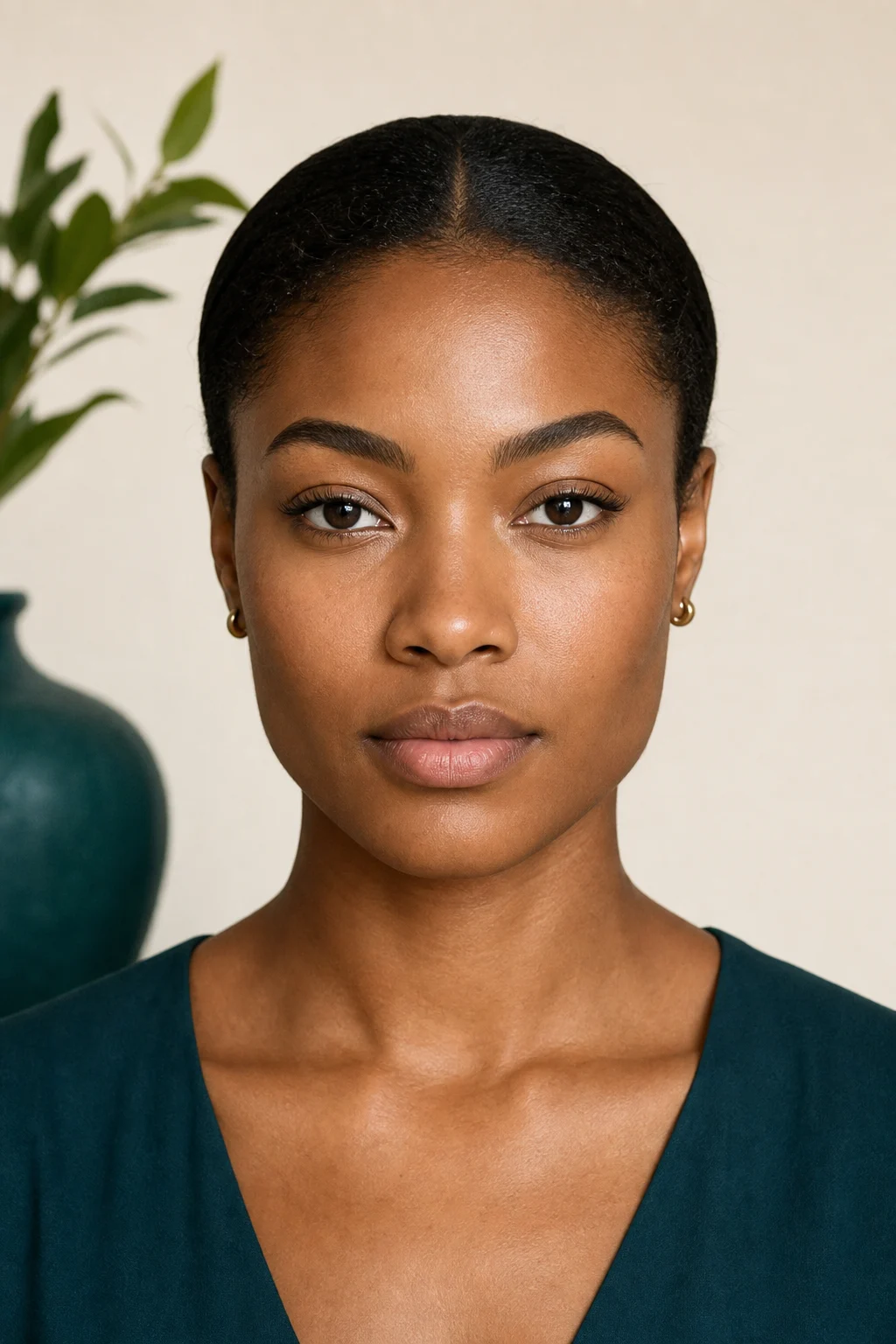
Recognizing a square face shape
A square face usually has a forehead, cheekbones, and jaw that appear close in width. The face often reads about as wide as it is long, and the lower contour has a clear, more angular line from jaw to chin.
The shape is about the frame of the face, not whether every corner looks sharp. A square face can have soft cheeks or a rounded chin while still keeping a broad, structured jawline.
A practical square face check
Look for structure across the whole outline before focusing on the chin. Compare the visible width of the forehead, cheekbones, and jaw in a front-facing photo. A square pattern often keeps these areas relatively even, so the sides of the face feel direct rather than strongly tapered. Then follow the line from cheekbone to jaw. It may be softened by skin, facial hair, or expression, but it often changes direction more clearly than a round outline.
Take more than one view before choosing a label. A low camera angle can overstate the jaw, and hair at the temples can hide the forehead width. When the jaw is defined but the face narrows steadily from cheekbones to chin, oval or triangle may be more useful comparisons than square.
Measurement cues
Compare the forehead, cheekbones, and jaw in a level, front-facing view. A square pattern often keeps those widths relatively close, so the sides of the face feel direct instead of tapering strongly toward the chin. The lower contour may change direction more clearly at the jaw, but a square face does not need sharp corners everywhere. Soft cheeks, a rounded chin, or facial hair can coexist with an overall structured frame.
Avoid judging from a low-angle selfie because it can overstate the jaw. Check the outline with hair away from the temples, then compare a second neutral view. The manual face shape calculator offers a private way to compare broad widths; use the round and square comparison when the only uncertainty is whether the lower transition feels curved or direct.
Hairstyle directions
Soft layers, waves, a side-swept fringe, and rounded texture can contrast with a defined jaw when you want a gentler overall line. A blunt cut, close crop, precise fade, or strong side part can instead echo the structure deliberately. The choice is about visual mood, not a requirement to soften anything. Keep the scale proportional to your hair density and the amount of daily styling you are willing to do.
For thick hair, internal layers can stop side volume from becoming a solid block; for fine hair, a clear perimeter or light lift may be more useful than many wispy layers. The square hairstyle guide has additional examples of contrast and continuity by length and texture.
Glasses directions
Round, oval, thin-metal, and softly curved frames can make the eye area feel lighter or more relaxed. Rectangular and bold acetate frames can repeat the face's direct lines for a graphic look. Neither direction is universally more flattering. Compare corner rounding, frame thickness, and lens height rather than assuming that every square face needs a round frame.
Check the bridge and temples as carefully as the front view. A comfortable frame that stays positioned correctly will look better through the day. The square glasses guide explains the tradeoffs between a softer contrast and a bolder structured frame.
Use the result as context
A square result can help you talk about structure, but it does not require you to make every choice softer. Keep one style that echoes the direct jawline and one that introduces curves or movement, then compare the mood each creates in ordinary light. The right option is the one you can wear comfortably and maintain without turning a styling preference into a rule. Keep the test grounded in your real routine. Check how the frame stays in place, how hair settles after movement, and whether the shape still feels right after you have spent a day wearing it rather than only when you first style it.
Style principles
Curves and movement can balance a defined outline when you want a softer contrast. Soft waves, a side-swept fringe, and layered medium lengths are practical places to begin. Round, oval, and thin metal frames add curved or lighter lines around the eye area.
There is no need to hide a strong jaw. A blunt cut or bold frame can deliberately echo it; use softer options when you prefer contrast.
Common confusions
Square and round faces often share similar length and width. Look at the jaw transition: square is more linear and round is more curved. Square and triangle shapes both have lower-face presence, but triangle shapes become visibly wider at the jaw than at the forehead.
If an angular jaw is creating the uncertainty, use the oval and square comparison or round and square comparison. Read the triangle face shape guide, use the manual method, or analyze a photo privately.