Face shape guide
Triangle Face Shape: Traits, Hair, and Glasses
Identify a triangle face shape from a wider jawline and narrower upper face, with styling directions to explore.
Analyze my face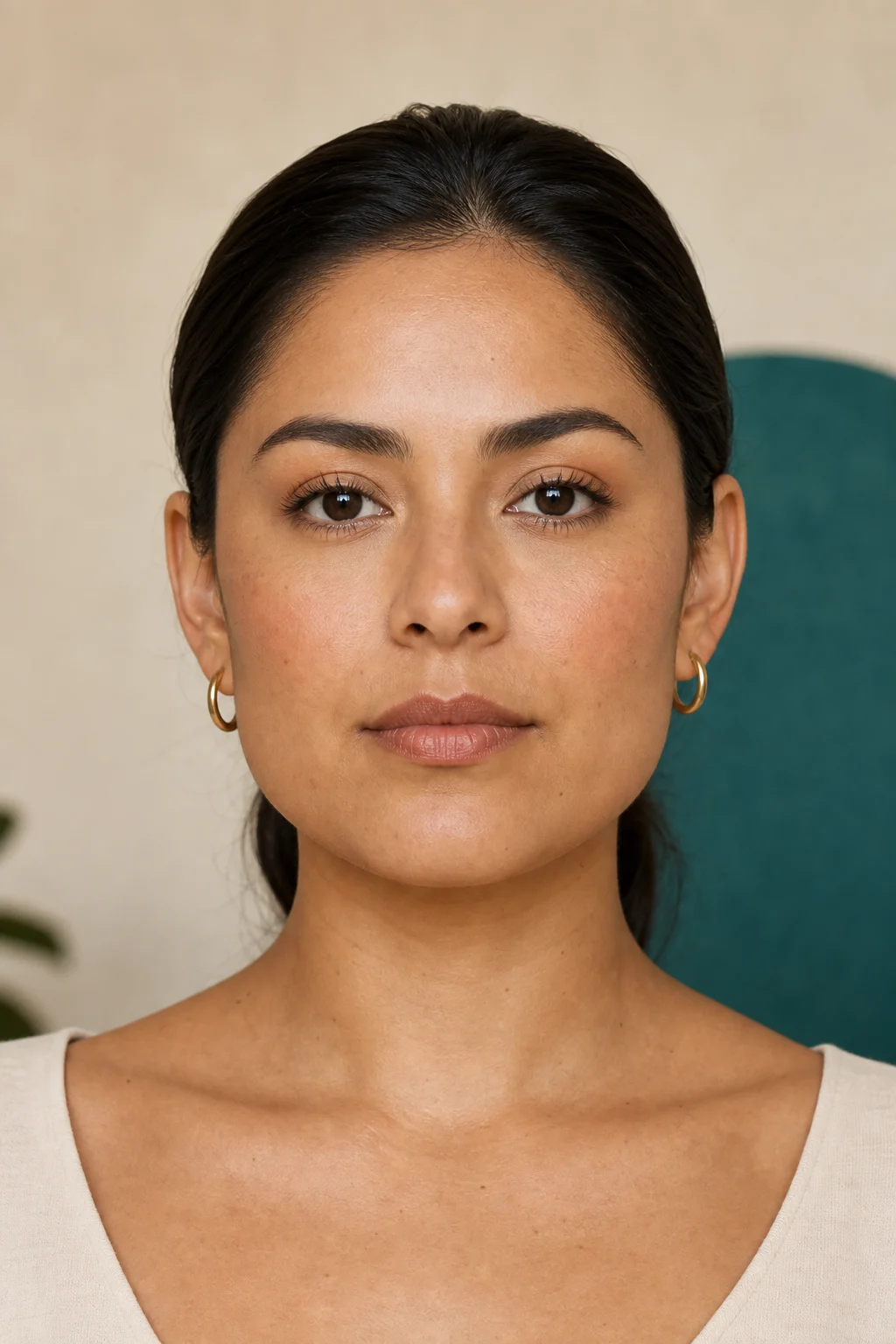
Recognizing a triangle face shape
A triangle face shape, sometimes called pear-shaped, is narrower at the forehead and becomes wider through the jaw. The cheekbones may be moderate in width, while the lower face provides the strongest horizontal line.
Look at the face with the head level and hair moved away from the temples. Hair volume around the crown can make the upper face look wider, so compare the natural forehead and jaw outline.
A practical triangle face check
Begin by comparing the top and bottom of the outline, not by looking only at a strong jaw. In a triangle face shape, the forehead usually appears narrower than the jaw when both are visible in the same straight-on view. The sides can open outward as they move from the temples toward the lower face, which creates a different pattern from a square face with more even widths.
Check this with hair away from the temples and with the chin level. A close camera or a hairstyle that is wide at the crown can disguise the upper-to-lower change. If the forehead is actually the broadest area and the chin narrows, heart is likely the better comparison. This guide uses triangle for a lower-face-led outline, not as a rule about a single jaw feature.
Measurement cues
Start with the upper-to-lower relationship. A triangle pattern usually has a forehead that reads narrower than the jaw, with the sides opening outward as they move from the temples toward the lower face. The cheekbones may be moderate, while the jaw provides the broadest horizontal line. This differs from a square pattern, where the forehead and jaw more often stay similar in width.
Use a level view with hair away from the temples, and compare more than one photo before deciding. A wide hairstyle at the crown can disguise a narrower forehead, while a low angle can enlarge the lower face. The manual face shape calculator lets you check the four broad measurements without uploading a photo. Compare heart when the upper face, rather than the jaw, is actually the widest area.
Hairstyle directions
Volume, texture, or a part near the temples and crown can create lift around the upper face when you want more visual balance. Side-swept layers, curtain fringes, textured upper length, and softer crown movement are useful places to start. A sleek, close upper style can instead emphasize the strong lower line, which may be exactly the confident effect you want.
Hair density and growth direction affect the plan. Fine hair may need a slightly fuller perimeter or light root lift, while dense curls can use layers to place volume rather than letting it spread evenly. The triangle hairstyle guide offers directions by silhouette and maintenance, not a list of restrictions.
Glasses directions
Browline, cat-eye, top-detailed, and gently upswept frames can place more interest above the cheekbones. A rounded light frame can provide a quieter alternative. Look at the position of the top edge relative to your brows and the actual width at the temples; both can change the visual result more than a frame label.
Fit remains essential. The bridge should sit comfortably, the temples should not press, and the chosen lens shape must suit your prescription. The triangle glasses guide helps you compare lift, scale, and comfort before choosing a pair.
Use the result as context
A triangle label is a way to describe where the outline opens, not a command to disguise the jaw. Try one style that creates upper-face lift and another that lets the lower width remain the strongest line. Check both in ordinary light, with your usual hair texture and glasses, before deciding which effect feels more natural. The goal is a useful comparison, not visual correction. It can help to save one photo of each option under similar conditions. Looking at them later makes the choice less dependent on the mood of the moment and more connected to the style you genuinely want to repeat.
Style principles
Visual lift around the temples and crown can balance a stronger lower outline. Soft crown lift, temple texture, and side-swept layers are practical places to begin. Browline, cat-eye, and top-detailed frames add interest above the cheekbones.
You can also choose a broad lower-face emphasis intentionally. Style guidance is about visual effect, not rules about what should be minimized.
Common confusions
Triangle and square shapes can both have a pronounced jaw. In a triangle shape the jaw is visibly wider than the forehead; in a square shape the widths are more even. Triangle and heart are opposites in their upper-to-lower taper.
Compare triangle and square face shapes when the lower contour feels structured in both labels. Compare the square face shape guide, use the manual method, or analyze a photo privately.