Face shape guide
Heart Face Shape: Traits, Hair, and Glasses
See how a wider upper face and narrower lower face can form a heart face shape, with practical style ideas.
Analyze my face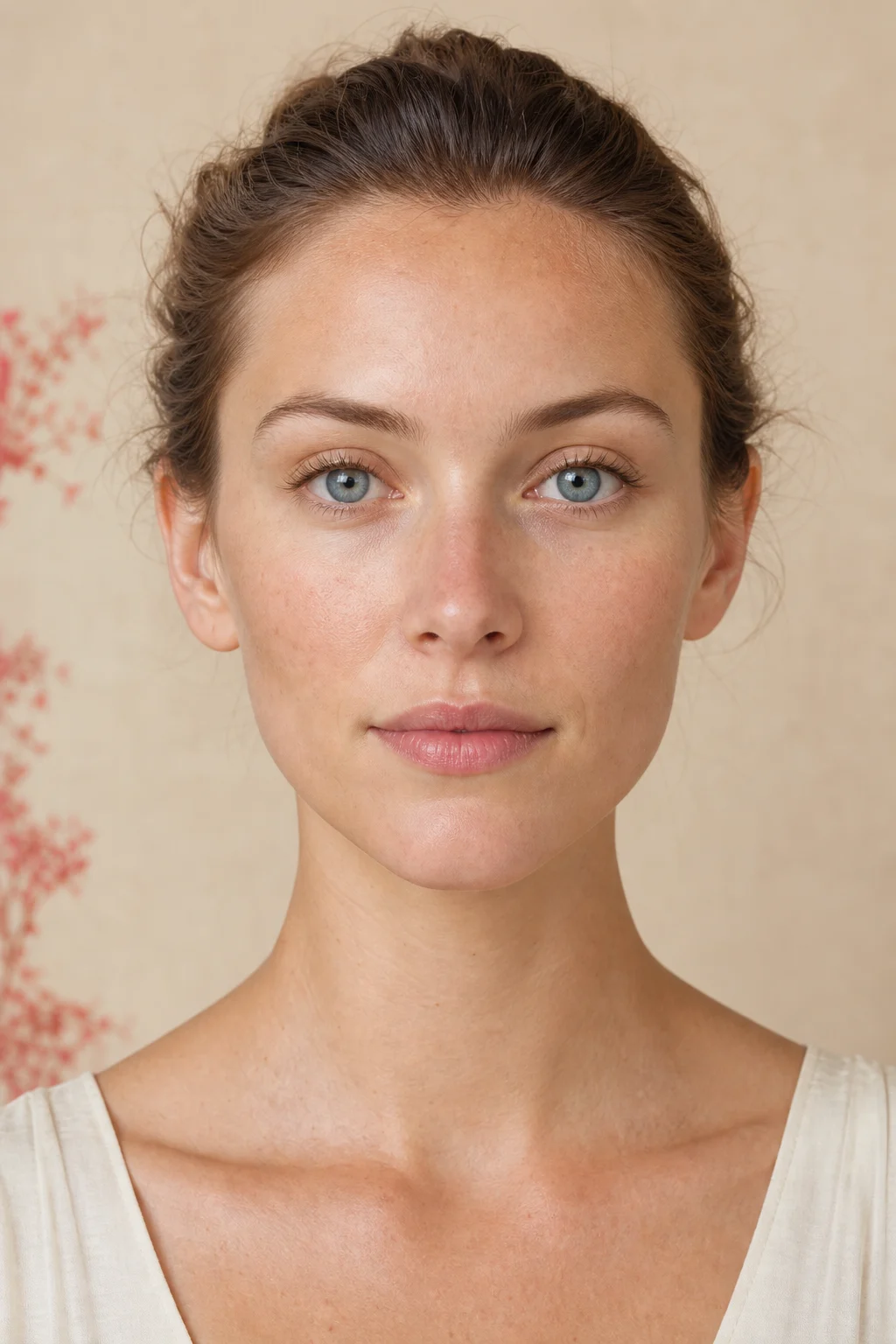
Recognizing a heart face shape
A heart face shape often looks wider through the forehead or upper cheeks and narrows toward a smaller jaw and chin. Some people have a widow's peak, but it is not required. The key signal is the taper from the upper face to the lower face.
Check the outline with hair pulled back if possible. Heavy fringe and wide hair at the temples can make any face appear more heart-like, so use the natural hairline and jaw as your reference.
A practical heart face check
Compare the forehead, upper cheeks, and jaw in the same level view. A heart face shape usually begins with more visible width through the upper face, then moves inward toward a smaller jaw and chin. The taper can be gentle or pronounced. A widow's peak may be present, but it is not the feature that decides the label. The overall direction from top to bottom is more useful.
Repeat the check without relying on fringe, parting, or a dramatic camera angle. Hair that sits wide at the temples can make the upper face look broader, while a tilted chin can make the jaw look smaller. If the cheekbones are the widest point and the forehead narrows above them, compare with diamond. If the face tapers only slightly and stays balanced through the sides, compare with oval.
Measurement cues
Compare the upper and lower widths in the same neutral view. A heart pattern usually has more visible width at the forehead or upper cheeks and narrows toward the chin. The temples may feel broad, the cheekbones may be pronounced, and the jaw often moves inward rather than opening outward. A pointed chin can support the pattern, but it is the upper-to-lower taper that carries more weight than the chin alone.
Check the outline with hair away from the temples, then check it again in your usual style. A full fringe, high volume, or a close camera can overstate the upper face. The manual face shape calculator gives you a photo-free way to compare forehead, cheekbone, and jaw widths before deciding whether heart or diamond is the more useful starting point.
Hairstyle directions
Styles with movement around the jaw, sides, or lower lengths can add width below the cheekbones when you want a more even silhouette. A layered bob, shoulder-length waves, a side-swept fringe, or textured sides are all ways to experiment with that effect. A sleek center part or a higher crown can instead make the upper face the focal point; choose that direction when it fits your personal style.
Consider the maintenance along with the line. Fine hair may need a blunt edge or gentle layers to keep its shape, while dense curls can use carefully placed layers to avoid a solid upper block. The heart hairstyle guide offers additional options without assuming you need to minimize any feature.
Glasses directions
Oval frames, light lower rims, softly rounded rectangles, and restrained cat-eye shapes can create different balances around the eyes. A frame with too much weight at the brow may emphasize the upper width, but that can be a bold choice if you enjoy it. Pay more attention to bridge comfort, lens position, and overall frame scale than to a single category name.
Try frames with different top lines before deciding. One can feel quiet and light; another can make the eye area more graphic. The heart glasses guide explains those directions in more detail and keeps fit ahead of styling rules.
Use the result as context
Use the heart label to organize an experiment, not to narrow your style. Try a look that places movement near the jaw and another that makes the upper face the focal point. Compare both in your normal lighting and with your usual glasses. The better choice is the one that feels intentional, comfortable, and easy to repeat in your ordinary routine. Keeping the comparison small helps: change one element at a time, such as the part, fringe, frame line, or beard shape, then give yourself enough time to notice whether it works beyond a single first impression.
Style principles
Styles that add visual presence near the jaw can balance a narrower lower face. Jaw-length texture, side fringe, and shoulder-length layers are flexible starting points. Bottom-heavy, rounded, and light rimless frames can keep the upper face from feeling overemphasized.
Treat these as options, not corrections. A dramatic upper-face frame can be a strong style choice when that is the effect you want.
Common confusions
Heart and oval faces can overlap when the forehead is only slightly wider than the jaw. Heart and diamond shapes both may have a narrow chin, but diamond shapes tend to be widest at the cheekbones with a narrower forehead.
The heart and diamond comparison is useful when both labels seem plausible. Compare the diamond face shape guide, review how the analysis handles quality and uncertainty, follow the manual method, or analyze a photo privately.