Face shape guide
Best Hairstyles for an Oval Face Shape: Ideas by Length and Texture
Explore hairstyle directions for an oval face shape, with practical ideas by length, texture, maintenance, and personal style.
Analyze my face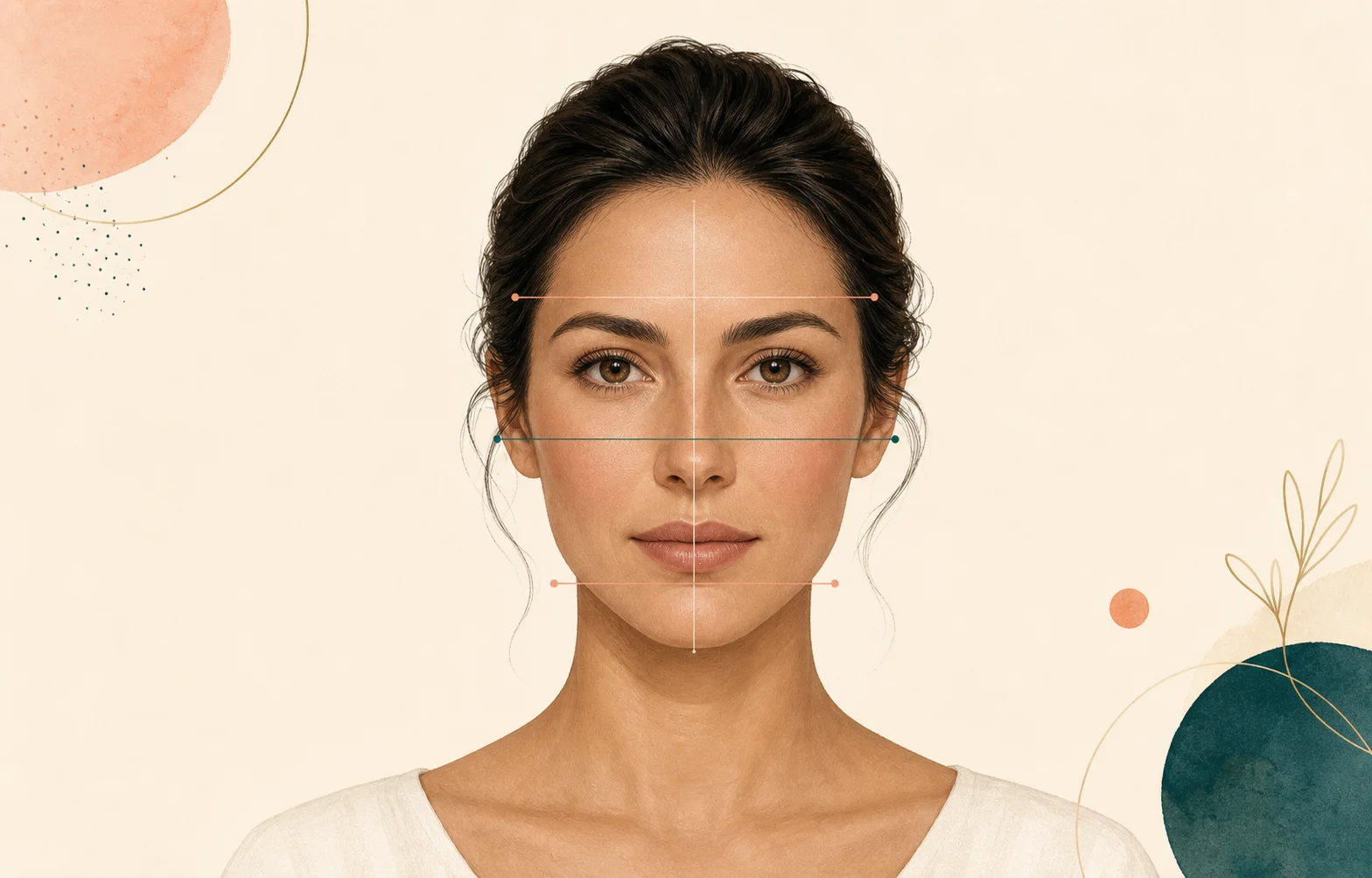
An oval face is often described as flexible because its length, cheekbone width, and jawline tend to form a gradual outline. That does not mean every cut will feel equally useful to every person. Hair density, curl pattern, hairline, glasses, routine, and the look you want all change the decision. The most useful starting point is the oval face shape guide, then a haircut that creates a silhouette you enjoy seeing in the mirror.
This guide uses "best" to mean a good direction to try, not a rule that needs to correct your face. A cut can repeat the softness of an oval outline, add a more graphic line, show off texture, or make daily styling simpler. Use the ideas below as vocabulary for a conversation with your barber, stylist, or yourself.
What makes a hairstyle work for an oval face?
An oval outline usually reads a little longer than it is wide, with a gentle taper from the cheekbones toward the jaw. The proportions often leave room for many silhouettes because no single width has to be hidden. The main question is where a hairstyle places its visual weight. A high quiff, close sides, or long straight lengths can emphasize vertical movement. A fringe, broad waves, or volume near the temples can create more horizontal movement. Neither effect is inherently better; they simply produce different first impressions.
Start with scale. Small features can be overwhelmed by a very dense crown or by a heavy curtain of hair at the cheeks. Larger features may carry stronger lines and more volume comfortably. Then notice the hairline and growth pattern. A fringe can be a deliberate choice, but it may require more drying and trimming than a swept-back style. Cowlicks, curl shrinkage, and the direction your hair naturally falls are design inputs, not problems to defeat.
It also helps to separate face shape from hair type. A blunt bob can look very different in fine straight hair, dense coils, or loose waves. Ask what the cut will do on an ordinary morning rather than only how it looks after a salon finish. When you are not sure about the outline itself, compare a neutral photo with the manual face shape calculator or use the private face shape detector as a second perspective.
Hairstyles to explore
Short cuts with structure
A textured crop, classic taper, pixie, or short layered cut can make an oval outline feel crisp without relying on extreme volume. Keep the top close and piecey when you want a compact silhouette, or add a little lift at the front when a more vertical line feels right. A side part gives the eye a diagonal path and can make a short cut feel polished with very little effort. For hair that grows outward, short internal layers can reduce bulk while preserving a soft outline.
If you wear glasses, consider where the haircut ends relative to the frame. Very close sides can make a bold frame the strongest graphic element, while a soft fringe or temple texture can balance a lighter frame. The oval hairstyle directions and oval glasses directions offer focused ideas when you want to compare those two choices together.
Medium lengths and face-framing layers
Medium-length cuts are a useful middle ground for an oval face. A lob, shag, soft wolf cut, layered bob, or medium scissor cut can put movement around the cheekbones without covering the outline entirely. Curtain bangs create a soft opening through the center; a side-swept fringe introduces asymmetry; and longer layers keep the cut adaptable for updos or tucked-behind-the-ear days.
Think about the position of the widest part of the style. Volume around the temples can make the upper face feel more open. Volume that sits directly at the cheekbones can feel playful and full. Smoother sides with a little height at the crown make the whole look read more vertical. Trying a version of the same cut with different partings is often more revealing than switching to a completely new haircut.
Long hair, waves, and braids
Long hair works well when it has an intentional shape. Long, even lengths can look sleek and graphic; soft layers prevent dense hair from becoming one solid block; and face-framing pieces create movement near the jaw. If you like a longer vertical impression, keep the sides relatively smooth and let the length fall below the shoulders. If you prefer more width or texture, waves, braids, curls, and layered volume can expand the silhouette at the sides.
Protective styles deserve the same scale conversation as loose hair. The placement of a part, the height of a bun, braid thickness, and added length all change the outline. Try a center part, offset part, half-up style, or low bun to see which line complements the look you want. None of these choices need to be justified by a label; they are ways to decide where attention lands.
Fringe, bangs, and a visible forehead
An oval face can support a visible forehead, a full fringe, or something in between. Wispy bangs soften the transition from hairline to face. A blunt fringe creates a stronger horizontal line and can make the eye area feel more central. Curtain bangs keep some forehead visible while building movement around the temples. A swept-back front exposes the entire outline and shifts attention to the brows, eyes, and glasses.
Before cutting a fringe, make a low-commitment trial. Pin or style the front section forward for a few days, check it in your usual light, and notice how much maintenance it asks of you. A good haircut is one that still makes sense after a commute, workout, or humid afternoon.
Choose by hair type and routine
Fine or low-density hair
Fine hair often benefits from cuts that create an intentional perimeter. A shorter bob, textured crop, soft layers that do not over-thin the ends, or a side part can make the hair feel present without requiring a great deal of product. Avoid assuming that more layers always mean more volume; on very fine hair, too many can remove the fullness you want. A small amount of root lift or a slightly off-center part may be enough.
Dense, thick, or coarse hair
Dense hair gives you more options for shape, but it can build weight quickly at the sides. Internal layers, careful debulking, and a length that lets curls or waves settle can make the silhouette easier to manage. If you like maximum volume, keep it in one clear area such as the crown or a rounded upper shape. If you prefer a calmer result, ask for a cut that removes bulk while retaining the natural texture rather than forcing it flat.
Curly, coily, or wavy hair
Texture creates its own width and height, so evaluate the cut when your hair is dry and in its usual state. A curl-by-curl shape, rounded layers, tapered sides, or a longer halo can each make sense depending on the result you want. Remember that shrinkage changes visible length. Tell your stylist whether you usually wear your curls defined, stretched, diffused, braided, or in a protective style so the planned shape matches real life.
Low- and high-maintenance routines
Choose maintenance before choosing an inspiration image. A short fringe, precise fade, or highly layered shape may need regular trims and daily styling. Long layers, a one-length cut, or a style that works with natural texture can stretch appointments further apart. Save two or three references that share your hair density and texture, then ask which parts of each image are realistic for your schedule.
Make the choice personal
The best hairstyle for an oval face is not a fixed list of cuts. It is a combination of proportion, texture, maintenance, and the visual mood you want to create. You might choose sharp lines because they contrast with a soft outline, or choose loose waves because they feel familiar and expressive. Both are valid style decisions.
Use the full oval face-shape page to revisit the visual signals, the oval hairstyle guide for more specific directions, and the private analyzer when you want a second look at a neutral photo. Keep the result as a starting point, then choose the haircut that fits how you want to move through the day.