Face shape guide
How to Choose Glasses for Your Face Shape: Fit, Scale, and Style
Choose glasses by fit, comfort, scale, and the visual effect you want, with practical frame directions for seven common face shapes.
Analyze my face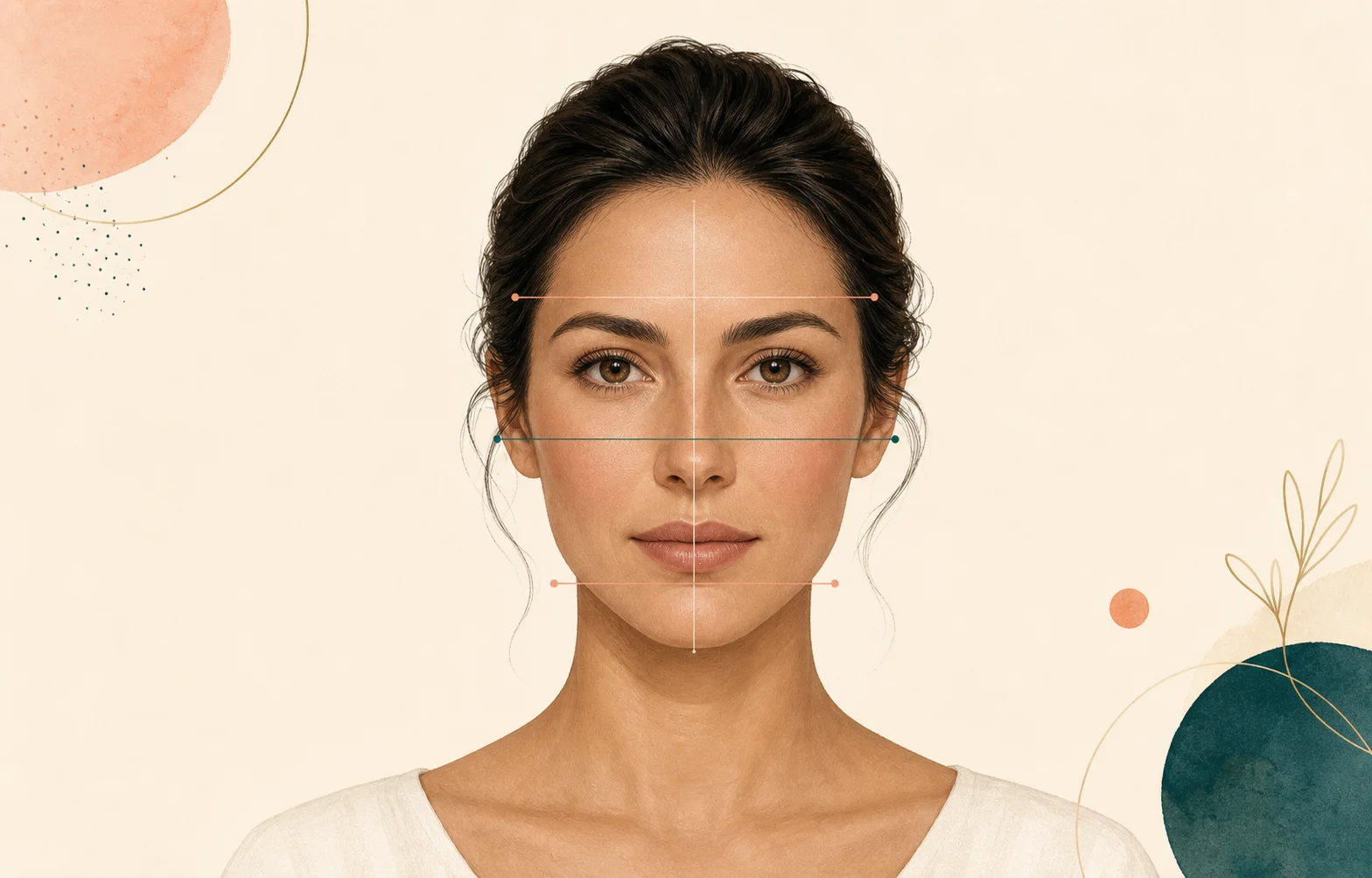
Face shape can be a helpful way to describe the visual effect a frame creates, but it is only one part of choosing glasses. A frame also needs to sit comfortably, work with your prescription, suit your daily routine, and feel like something you want to wear. Start with the fit; use face shape as a language for comparing lines, scale, and contrast rather than a set of rules.
If you have not identified your outline yet, the face shape guides give you a calm way to compare proportions. You can also try the browser-only face shape detector with a neutral photo or the manual calculator without uploading an image.
Start with the visual effect you want
Before filtering by face shape, decide what you want your glasses to do. A thin metal frame can almost disappear and leave your features in focus. A dark acetate frame can create a clear eye line. A rounded frame may echo soft contours, while a rectangular, geometric, or upswept frame can add definition and direction. There is no obligation to balance anything; sometimes a frame that repeats a feature is exactly the point.
Fit comes first because a flattering frame that slips, pinches, or blocks your vision will not become a favorite. The bridge should rest without persistent pressure, the temples should not dig behind the ears, and the pupils should sit close to the optical center of each lens. Frame width is a useful starting measurement: a frame near the width of your face usually looks intentional, while a narrower or wider frame makes a more distinct style statement.
Prescription needs can change the choice. Stronger prescriptions may benefit from a lens shape and frame size that manage edge thickness or lens weight. Progressive lenses need adequate vertical depth. High-wrap sport frames, rimless frames, and very shallow lenses can have different limitations at an optician. Ask about lenses early, so you do not choose a favorite frame that is not practical for your prescription.
Frame directions by face shape
The seven labels below describe broad patterns, not categories people need to fit perfectly. Read the directions as experiments. Try on two contrasting frames, take a straight-on photo if the store allows it, and notice which one supports the mood you want.
Oval face shapes
An oval outline is often longer than wide with a gentle taper toward the jaw. Because it is relatively balanced, many frame shapes can work. Soft-square, wayfarer, rounded rectangle, subtle cat-eye, and lighter wire frames all make different statements. Choose moderate scale if you want the frame to sit in conversation with the whole face; choose an oversized frame when you want a more editorial look. The dedicated glasses guide for oval face shapes and oval face shape guide can help you compare scale with hairstyle choices.
Round face shapes
Round outlines often have similar visible length and width with softly curved cheeks and jaw transitions. Rectangular, browline, geometric, and slightly upswept frames can add a cleaner eye line when you want contrast. A round frame can also work beautifully when you prefer to repeat the softness; check that the frame has enough scale and bridge structure for your features. Read the round glasses directions alongside the round face shape guide before treating a single feature as decisive.
Square face shapes
Square patterns tend to have more even widths through the forehead, cheeks, and jaw, with a defined lower contour. Round, oval, thinner metal, and softly curved frames can create a relaxed contrast. A square acetate frame can echo the structure deliberately, especially when you want a bolder look. Corner rounding, lens height, and frame thickness often matter more than the label on the display. Explore the square glasses guide for a more focused comparison.
Heart face shapes
Heart outlines usually carry more width at the forehead or upper cheeks and narrow toward the chin. Lighter lower rims, oval frames, soft cat-eyes, and frames that are not overly top-heavy can feel balanced when that is your goal. At the same time, an expressive browline frame can intentionally draw attention to the eyes. Look at the heart glasses directions and make sure the bridge and temples fit before deciding from the front view.
Diamond face shapes
Diamond patterns tend to have the cheekbones as their widest point, with a narrower forehead and jaw. Oval, softly curved, rimless, and upswept frames can bring attention toward the eyes and brow area. A wide or decorative top line can be useful when you want more emphasis above the cheeks. Frame width should still suit your actual temple width, so test more than one size. The diamond glasses guide gives a second set of ideas without requiring a perfect label.
Oblong face shapes
Oblong faces often read noticeably longer than wide, with widths that stay fairly even from temple to jaw. Taller lenses, rounded corners, a visible top line, or decorative temples can add visual width or break up a vertical line. Very narrow, shallow frames can lengthen the impression, but they may be the right choice if minimalism is your preference. Compare the oblong glasses directions with a few deeper lens shapes in person.
Triangle face shapes
Triangle outlines usually begin narrower at the forehead and become broader at the jaw. Browline, cat-eye, and top-detailed frames can create lift around the upper face. A light, rounded frame can be a quieter alternative. Pay attention to where the top edge sits relative to your brows; that relationship often changes the effect more than the exact frame category. The triangle glasses guide offers additional directions.
Check fit before committing
Try frames in ordinary lighting as well as the mirror wall at the store. Look straight ahead, turn slightly, smile, and lower your chin. The frame should not sit so high that it touches your brows with every expression, and it should not rest on your cheeks when you smile. If it slides, ask whether nose pads, temple adjustment, or another bridge fit would solve it. A frame that looks right from one angle but needs constant adjustment is not truly right yet.
Bring the practical context into the fitting. Use headphones? Check temple comfort. Spend time outdoors? Consider sun clips, transitions, or prescription sunglasses. Need a strong prescription or progressives? Ask about lens depth and edge thickness. Wear makeup, a head covering, or a hairstyle that changes often? Try the frame with those conditions rather than assuming it will adapt.
Take a moment to separate the optician's technical recommendation from your style decision. Their advice on fit, lens compatibility, and adjustments is essential. Your preference on visibility, color, contrast, and personality is equally real. The best pair is the one that satisfies both.
Build a small comparison set
Instead of searching for a single perfect frame immediately, try a small set: one close to your usual style, one softer or lighter, and one with more definition. Compare them at the same size and prescription if possible. This makes it easier to notice whether you prefer more lift, more horizontal width, more color, or less visual weight.
Face shape can make that comparison more intentional, but it should never make the choice smaller. Revisit the all face shapes library, the shape-specific glasses pages, or the private analyzer when you want more context. Then choose the pair that fits, lets you see clearly, and feels like your own.