Face shape guide
Face Shape Guide for Men: Hair, Facial Hair, and Glasses Directions
Use facial proportions as a practical starting point for men's haircuts, facial hair, glasses, and grooming choices without rigid rules.
Analyze my face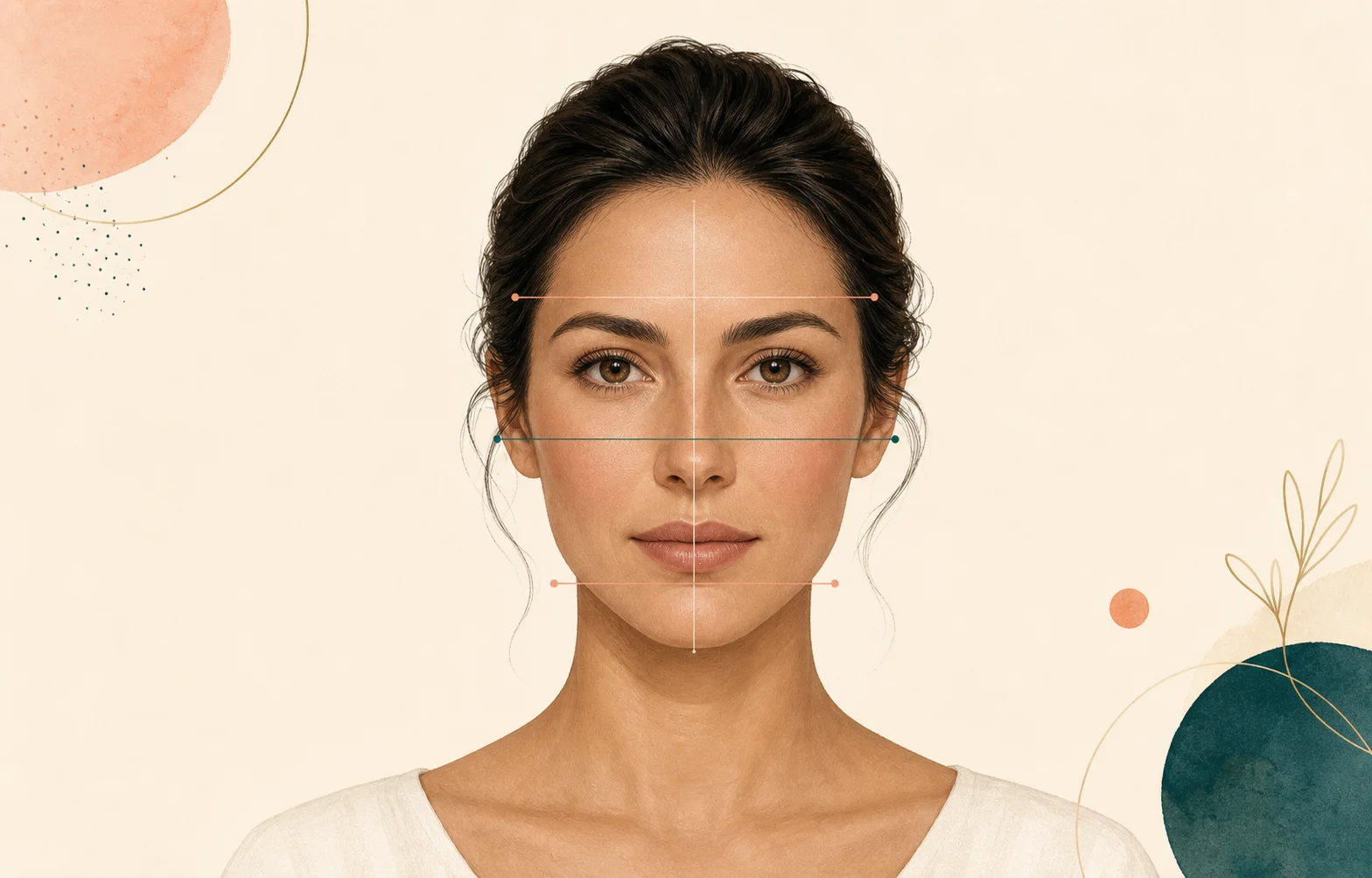
Face-shape advice for men is most useful when it helps you describe a look to a barber or decide what to try next. It is less useful when it treats one outline as a problem to fix. Your haircut, beard, stubble, glasses, hair texture, hairline, and daily routine all change the overall picture. The aim is to understand the lines you are working with, then choose the amount of contrast, structure, or softness that feels right to you.
The common labels are oval, round, square, heart, diamond, oblong, and triangle. Many people sit near the edge of two labels, especially when facial hair or a hairstyle changes the visible outline. Start with the face shape library, use the private face shape detector with a neutral photo, or compare four measurements with the manual face shape calculator. Treat the result as a useful description, not a verdict.
Start with proportions, not rules
Use a straight-on view in even light with a relaxed expression. If possible, move hair away from the temples and notice the overall relationship between face length, forehead width, cheekbone width, jaw width, and jawline contour. Do not decide from a single feature. A prominent jaw, broad forehead, or long chin can matter, but the repeated outline across the whole face is more useful than any one detail.
An oval face generally reads a little longer than wide with a gentle taper toward the jaw. A round face often has similar visible length and width with curved transitions. A square face keeps more even widths with a defined lower contour. A heart face is wider through the forehead or upper cheeks and narrows toward the chin. A diamond face is widest at the cheekbones. An oblong face is distinctly longer than wide, often with relatively even side widths. A triangle face begins narrower at the forehead and becomes broader through the jaw.
These patterns can overlap. A short beard can make the lower face seem longer; a full beard can add width; a close fade exposes more of the temple area; and a fringe changes how much forehead you see. Take a few neutral views before choosing a label. The how to find your face shape guide walks through that process without requiring a photo upload.
Hair and facial-hair directions
Oval outlines
Oval faces often give you flexibility because the outline tapers gradually and does not strongly favor one width. Textured crops, a side part, medium layers, or a longer swept-back style can all work, depending on hair density and the effect you want. A short beard can add definition; a fuller beard can create a stronger lower line. Keep the beard shape intentional rather than assuming it needs to compensate for anything. See the oval hairstyle guide and oval face guide for more specific directions.
Round outlines
For a round pattern, height at the crown, a side part, texture through the front, or closer sides can create a more vertical silhouette when you want contrast. A beard with a slightly more defined lower edge can introduce another line, while uniform stubble keeps the look softer. You can also embrace round lines with a fuller, curved style; the choice is about the mood you prefer. The round hairstyle guide gives practical starting points.
Square outlines
Square faces often have an even width through the upper face and jaw, with a more direct cheek-to-jaw transition. Soft texture, a side-swept front, medium layers, or a rounded fringe can offer contrast. A crisp crew cut, structured fade, or boxier beard can deliberately echo the natural frame. Both directions can make sense. The square face guide is useful when you are comparing a defined jaw with a more triangular lower outline.
Heart and diamond outlines
Heart faces tend to carry more width above and narrow toward the chin, while diamond faces are often widest at the cheekbones. For either, temple texture, a moderate side part, or some length around the upper sides can change the balance without hiding features. Very narrow chin beards may emphasize the taper; short, softly shaped facial hair can feel more even. A taller quiff or clean-shaven look can work as well when you prefer the upper face to lead. Read the heart guide and diamond guide when those labels feel close.
Oblong outlines
Oblong faces read more vertical than oval faces. If you want to reduce that impression, moderate height at the crown, keep some width at the sides, and consider a fringe or textured front. A fuller beard at the chin can add more vertical length, while a beard with more side presence can change the lower silhouette. Neither is forbidden; use the effect you want as the deciding factor. The oblong hairstyle guide offers more options by length and texture.
Triangle outlines
Triangle faces often show a narrower forehead and stronger lower width. Volume or texture near the temples, a side sweep, and a little lift at the front can bring visual interest upward. A beard that is extremely broad at the jaw may emphasize the lower line; a shorter or more tapered beard can be a quieter choice. Compare the triangle face guide and triangle hairstyles when planning a new cut.
Glasses, grooming, and daily context
Glasses can be one of the quickest ways to change the eye line. A browline, rectangular, round, wire, or upswept frame each adds a different kind of structure. Fit matters before face shape: the bridge should sit comfortably, the temples should not pinch, and the lenses should work with your prescription. Use the glasses guides by face shape to compare visual directions after an optician confirms the technical fit.
Hair and facial-hair maintenance deserve equal weight. A precise fade or short fringe may need frequent trims. A beard with sharp lines needs regular edging. Medium layers, a natural curl shape, or consistent stubble may suit a lower-maintenance routine better. Be honest about what you will style on a weekday morning, not only what looks impressive in a reference photo.
Also factor in hair density, recession, curl pattern, and scalp visibility. These are normal characteristics, not flaws. A shorter, textured cut can make thinning hair easier to manage; a longer layered cut can celebrate density; and a beard can be either a focal point or a minimal detail. Talk to a barber about growth direction and upkeep, because the same inspiration image can need a different plan on different hair.
A practical decision process
Start with one clear intention. Maybe you want a cleaner outline for work, a more expressive textured style, a beard that is easier to maintain, or frames that make the eye area more visible. Choose two or three references with hair and density close to yours. Notice which part you actually like: the parting, the length, the texture, the beard edge, or the overall silhouette.
Then test the low-commitment changes first. Shift the part, grow stubble for a week, style the front up rather than down, or try frames in a different shape. Take photos in ordinary light, not only in a bathroom mirror. This makes it easier to separate what flatters a camera angle from what feels good in daily life.
Finally, use face shape as a communication tool. You can tell a barber that you have a roughly oblong outline and want less crown height, or that you have a square jaw and want a softer fringe. That is more actionable than asking for the single "right" cut. Revisit the all face shapes page, the private analyzer, or the manual calculator whenever you want a fresh comparison. Your preferred style is the outcome that matters most.
If a photo and your manual measurements point to different patterns, review how the face shape analysis works before changing your haircut or beard plan. Camera distance, head angle, hair, and facial hair can all change the visible outline, so a neutral second view is more useful than forcing the first result.